

This project inserts itself among the rich architectural fabric of the Isle of Capri’s coastline. Tiberius’ Villa Jovis celebrates the integrity of Roman power. The incomparable Casa Malaparte effortlessly sits on a remote promontory- a burnt red volume nestled among the orange limestone cliffs- you couldn’t imagine the coastline without the house there. Curzio Malaparte said of this section of the Capri coastline, ‘a place, in truth, only fit for strong men, for free spirits; nature expresses itself with incomparable and cruel strength.’
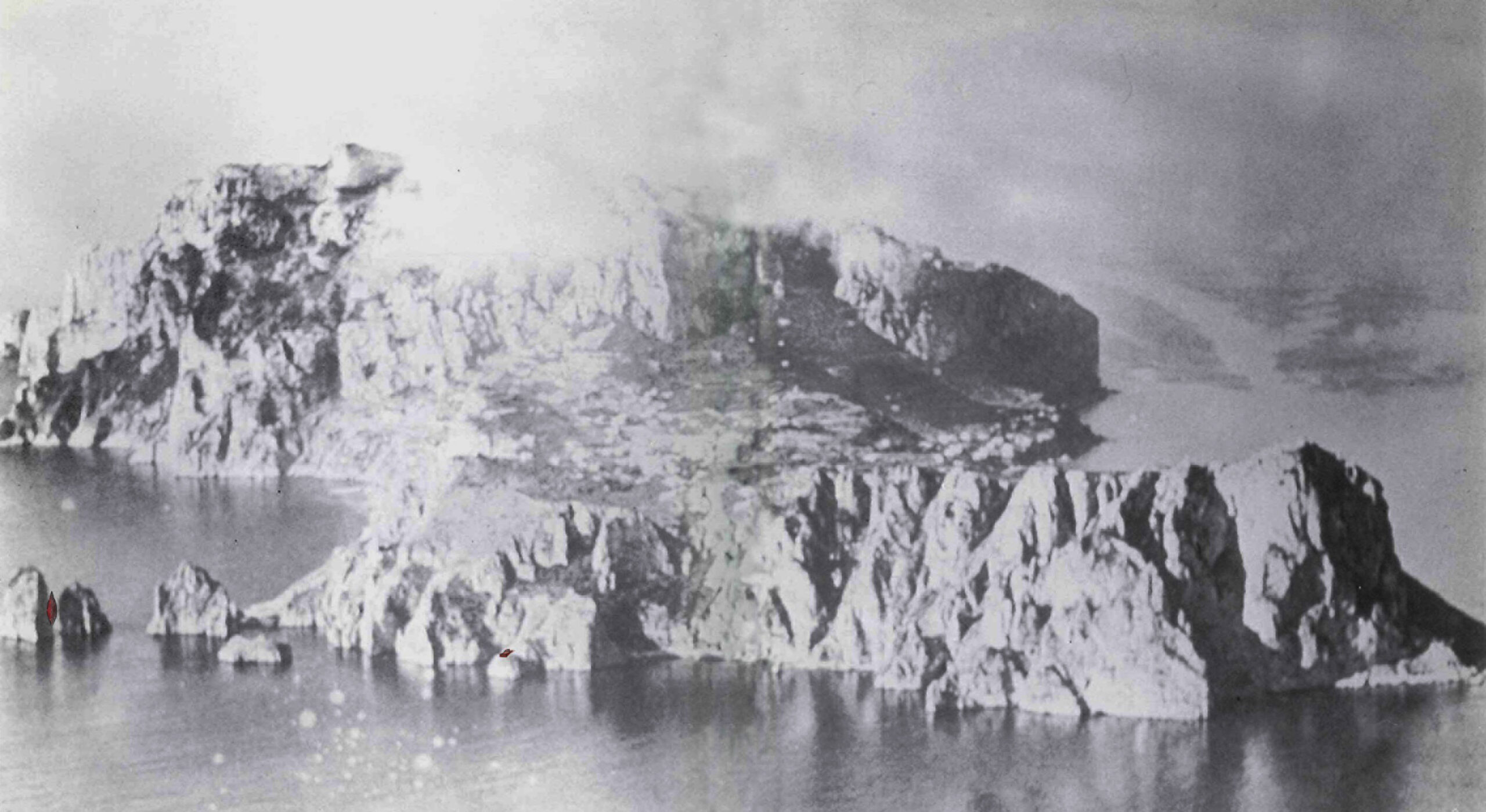
The site, located off the southeast coast of the Isle of Capri, is known as the Faraglioni. The Faraglioni consists of two giant masses of rock rising out of the Mediterranean to create a vertical space fifty feet wide by seventy feet deep by one-hundred ten feet tall. A chapel is placed in the void as a direct response to the site. The chapel is a vessel balanced between the giant rocks of the Faraglioni. Christian monasticism had its conceptual roots in the belief that union with God could best be attained by withdrawal from civilization into harsh and isolated regions.
These ancient landmarks announce themselves along the western Italian coastline. How does one design and build something between them that has an integrity of its own while not overwhelming the magnificence of the site? The chapel is a response to the mass and absolute nature of the rocks, with its subtle, slender form. It cuts the wind that passes through the rocks and diffuses the water that falls upon it. The chapel commands its own presence while hiding itself within the rocks. The space, the void, is full of tension and the chapel uses the tension in hosting a place of worship.
faraglioni_chapel
isle of capri, italy
1997 unbuilt
project team:
Architect: baile_studio